Comparison of Insulation Types
- 01 What Matters Most
- 02 Quick Comparison Chart
- 03 Fiberglass Insulation
- 04 Spray Foam Insulation
- 05 Cellulose Insulation
- 06 Foam Board Insulation
- 07 Mineral Wool Insulation
- 08 Best Insulation by Area
- 09 Best Insulation by Priority
- 10 Cost Comparison
- 11 Choosing the Right Insulation
- 12 FAQs
- 13 Key Takeaways
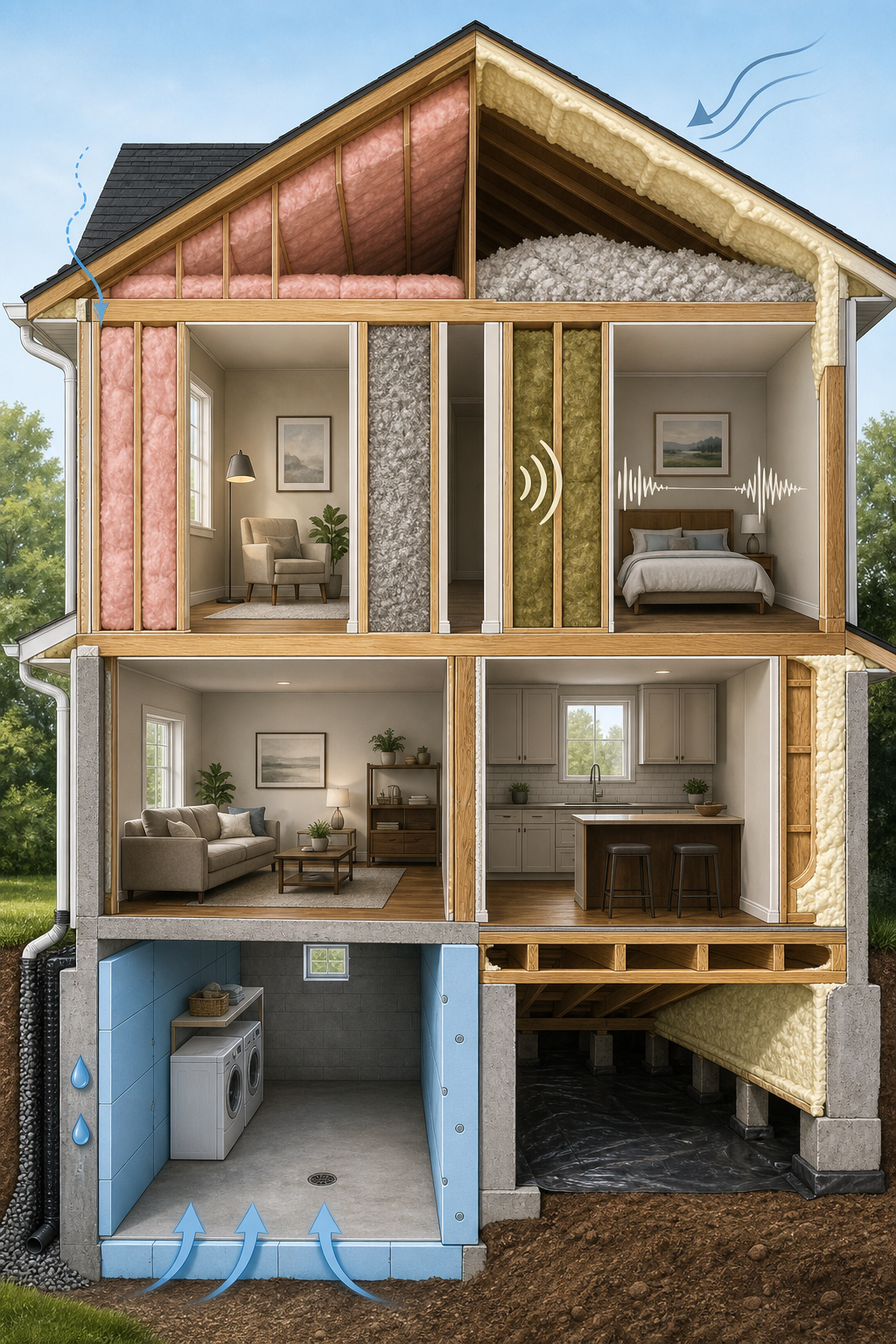
There is no single best insulation for every home. The right choice depends on where the insulation is being installed, your climate zone, your budget, air leakage issues, moisture exposure, and your overall energy-efficiency goals.
This guide compares the five main insulation types homeowners commonly consider:
- Fiberglass insulation
- Spray foam insulation
- Cellulose insulation
- Foam board insulation
- Mineral wool insulation
The goal is to help you quickly understand the strengths, drawbacks, costs, and ideal use cases for each insulation type so you can make a more informed decision for your home.
When comparing insulation, it is important to remember that R-value is only part of the equation. Installation quality, air sealing, moisture management, and proper ventilation also play major roles in overall performance.
What Matters Most When Comparing Insulation
The best way to compare insulation is to focus on a few core factors:
- Where the insulation is going
- Your climate zone
- Target R-value
- Air leakage issues
- Moisture exposure
- Available installation depth
- Budget
For example, a large open attic may benefit from blown-in fiberglass or cellulose, while a basement wall may be a better fit for foam board insulation.
Homes with significant air leakage may benefit more from spray foam in targeted areas, while homeowners focused on sound control may lean toward mineral wool.
Key Facts
- Insulation slows heat transfer but does not automatically stop air leaks.
- Air sealing can significantly improve insulation performance.
- Different insulation materials work better in different parts of the home.
- Climate-zone recommendations matter when selecting insulation levels.
Homeowners can often reduce heating and cooling costs by properly air sealing and insulating areas such as attics, crawl spaces, and floors above unconditioned spaces.
Source: ENERGY STAR
Quick Comparison Chart
Home Insulation Type Comparison
| Insulation Type | Common Forms | Best For | Main Advantage | Main Drawback | Typical Cost Range |
|---|---|---|---|---|---|
| Fiberglass | Batts, rolls, blown-in | Attics, walls | Affordable and widely available | Does not air seal | Low |
| Spray Foam | Open-cell, closed-cell | Air sealing, rim joists, rooflines | Excellent air sealing | Higher cost | High |
| Cellulose | Loose-fill, dense-pack | Attics, retrofit walls | Dense coverage | Moisture management matters | Low to Mid |
| Foam Board | EPS, XPS, Polyiso | Basements, exterior walls | High R-value per inch | Requires careful detailing | Mid |
| Mineral Wool | Batts, boards | Sound control, fire resistance | Dense and durable | Higher cost than fiberglass | Mid to High |
Fiberglass Insulation
Fiberglass insulation is one of the most commonly used insulation materials in homes. It is available in batts, rolls, and blown-in forms and is often used in attics, walls, and floor systems.
Homeowners often choose fiberglass because it is affordable, easy to source, and suitable for many standard framing situations.
However, fiberglass insulation does not create an air seal by itself, which means gaps and air leakage can still reduce overall efficiency if air sealing is not addressed first.
Best Uses for Fiberglass
- Open attic floors
- Standard wall framing
- Budget-focused projects
- DIY-friendly applications
Spray Foam Insulation
Spray foam insulation expands during installation to fill gaps and cracks, helping reduce both heat transfer and uncontrolled air leakage.
There are two main types:
- Open-cell spray foam
- Closed-cell spray foam
Closed-cell spray foam typically provides a higher R-value per inch and greater moisture resistance, while open-cell foam is softer and often used for interior applications.
Spray foam insulation is commonly used in:
- Rim joists
- Rooflines
- Crawl spaces
- Hard-to-seal areas
Because installation requires specialized equipment and safety procedures, professional installation is usually recommended.
Key Facts
- Spray foam combines insulation and air sealing.
- Closed-cell foam has a higher R-value per inch than many other insulation materials.
- Spray foam is commonly used in difficult-to-seal assemblies.
- Installation costs are typically higher than fiberglass or cellulose.
Cellulose Insulation
Cellulose insulation is primarily made from recycled paper fibers treated for fire resistance. It is commonly installed as loose-fill attic insulation or dense-packed wall insulation.
Because cellulose conforms well around framing and irregular spaces, it is often used in retrofit projects and attic upgrades.
Many homeowners also choose cellulose because of its recycled content and sound dampening benefits.
Common Applications
- Existing walls
- Attic upgrades
- Older homes
- Sound control projects
Cellulose insulation can contain a high percentage of recycled material, making it one of the more environmentally conscious insulation options available for homes.
Foam Board Insulation
Foam board insulation, also called rigid foam insulation, comes in rigid panels and is commonly used on flat surfaces such as basement walls, exterior sheathing, and foundation walls.
The three most common foam board types are:
- EPS (Expanded Polystyrene)
- XPS (Extruded Polystyrene)
- Polyiso (Polyisocyanurate)
Foam board insulation is valued for its high R-value per inch and ability to provide continuous insulation across framing.
Common Applications
- Basement walls
- Exterior wall sheathing
- Garage doors
- Crawl space walls
- Attic hatches
Common Foam Board Types
| Foam Board Type | Approximate R-Value Per Inch | Common Uses |
|---|---|---|
| EPS | Around R-3.6 to R-4.2 | General insulation applications |
| XPS | Around R-5 | Foundations and below-grade use |
| Polyiso | Around R-6 to R-6.5 | Exterior walls and roof systems |
Mineral Wool Insulation
Mineral wool insulation, sometimes called stone wool or rock wool insulation, is known for its fire resistance, sound dampening, and dense fiber structure.
Mineral wool insulation is commonly installed in wall cavities, floors, ceilings, garages, and areas where sound control is important.
Compared to fiberglass, mineral wool batts are denser and often fit more tightly within framing cavities.
Key Benefits
- Excellent sound dampening
- Fire-resistant properties
- Moisture resistance
- Durable dense batt structure
Best Insulation by Area of the Home
Best Insulation Types by Location
| Area of Home | Common Insulation Choices | Why They Work Well |
|---|---|---|
| Attic floors | Fiberglass or cellulose | Cost-effective for large open areas |
| Existing walls | Cellulose or spray foam | Works well in enclosed cavities |
| Exterior walls | Fiberglass or mineral wool | Standard cavity insulation solutions |
| Basement walls | Foam board or spray foam | Better moisture resistance |
| Rim joists | Spray foam | Excellent air sealing |
| Sound-control walls | Mineral wool | Strong sound dampening |
Best Insulation by Homeowner Priority
Lowest Upfront Cost
Fiberglass insulation is often the most affordable starting point for many homes.
Best Air Sealing
Spray foam insulation is usually the strongest option for reducing uncontrolled air leakage.
Best Sound Control
Mineral wool insulation is commonly preferred for reducing sound transfer between rooms.
Best for Retrofit Walls
Cellulose insulation is often used in enclosed wall retrofit projects because it can be dense-packed into existing cavities.
Best for Basement Walls
Foam board insulation is commonly used on basement and foundation walls because it performs well on flat masonry surfaces.
Cost Comparison
The cost of insulation depends on:
- Material type
- Installation method
- Accessibility
- Home size
- Climate zone
- Existing insulation conditions
General Insulation Cost Positioning
| Insulation Type | General Cost Position |
|---|---|
| Fiberglass | Low |
| Cellulose | Low to Mid |
| Foam Board | Mid |
| Mineral Wool | Mid to High |
| Spray Foam | High |
Any insulation material can perform poorly if it is installed incorrectly or combined with uncontrolled air leakage.
How to Choose the Right Insulation
Start by identifying the actual problem you are trying to solve.
Questions to ask include:
- Is the home drafty?
- Are energy bills unusually high?
- Are certain rooms uncomfortable?
- Is outside noise a concern?
- Is moisture present?
- Is the project a new build or retrofit?
Next, consider where the insulation is being installed and compare the strengths of each insulation type for that area.
In many homes, the best overall insulation strategy uses multiple insulation types together rather than relying on a single material everywhere.
Fiberglass, spray foam, cellulose, foam board, and mineral wool insulation all have strengths and tradeoffs. The best insulation choice depends on the area of the home, climate conditions, project goals, and budget. Proper installation and air sealing are just as important as the insulation material itself.
Frequently Asked Questions
There is no universal best insulation for every home. The right choice depends on your climate, budget, air leakage concerns, and where the insulation is being installed.
Spray foam typically provides better air sealing and higher R-value per inch, but fiberglass is usually much more affordable.
Cellulose often provides denser coverage and works well in retrofit applications, while fiberglass is commonly easier and less expensive to install.
Foam board insulation and closed-cell spray foam are commonly used on basement walls because they perform well in moisture-prone areas.
Mineral wool may be worth the added cost for homeowners prioritizing sound control, fire resistance, and dense batt performance.
In many cases, yes. Air sealing can significantly improve overall insulation performance and comfort.
- Fiberglass insulation is often the most affordable and widely available option.
- Spray foam insulation provides strong air sealing and high performance but usually costs more.
- Cellulose insulation is commonly used for attic upgrades and retrofit wall projects.
- Foam board insulation works especially well on basement walls and exterior sheathing.
- Mineral wool insulation stands out for sound control and fire resistance.
- Air sealing should typically happen before or alongside insulation upgrades.
- The best insulation type often depends on the specific area of the home.
-
Energy Efficiency: U.S. Department of Energy. “Insulation.”
-
Energy Efficiency: U.S. Department of Energy. “Types of Insulation.”
-
Materials Guidance: U.S. Department of Energy. “Insulation Materials.”
-
Energy Savings: ENERGY STAR. “Why Seal and Insulate?”
-
R-Value Guidance: ENERGY STAR. “Recommended Home Insulation R-Values.”
-
Installation Guidance: ENERGY STAR. “Choosing the Appropriate Insulation Type.”
-
Indoor Air Quality: U.S. Environmental Protection Agency. “Vacate and Safe Re-Entry Time for Spray Polyurethane Foam Application.”
-
Industry Guidance: Insulation Institute. “Insulation Types: Fiberglass, Mineral Wool, Spray Foam.”