Spray Foam Home Insulation
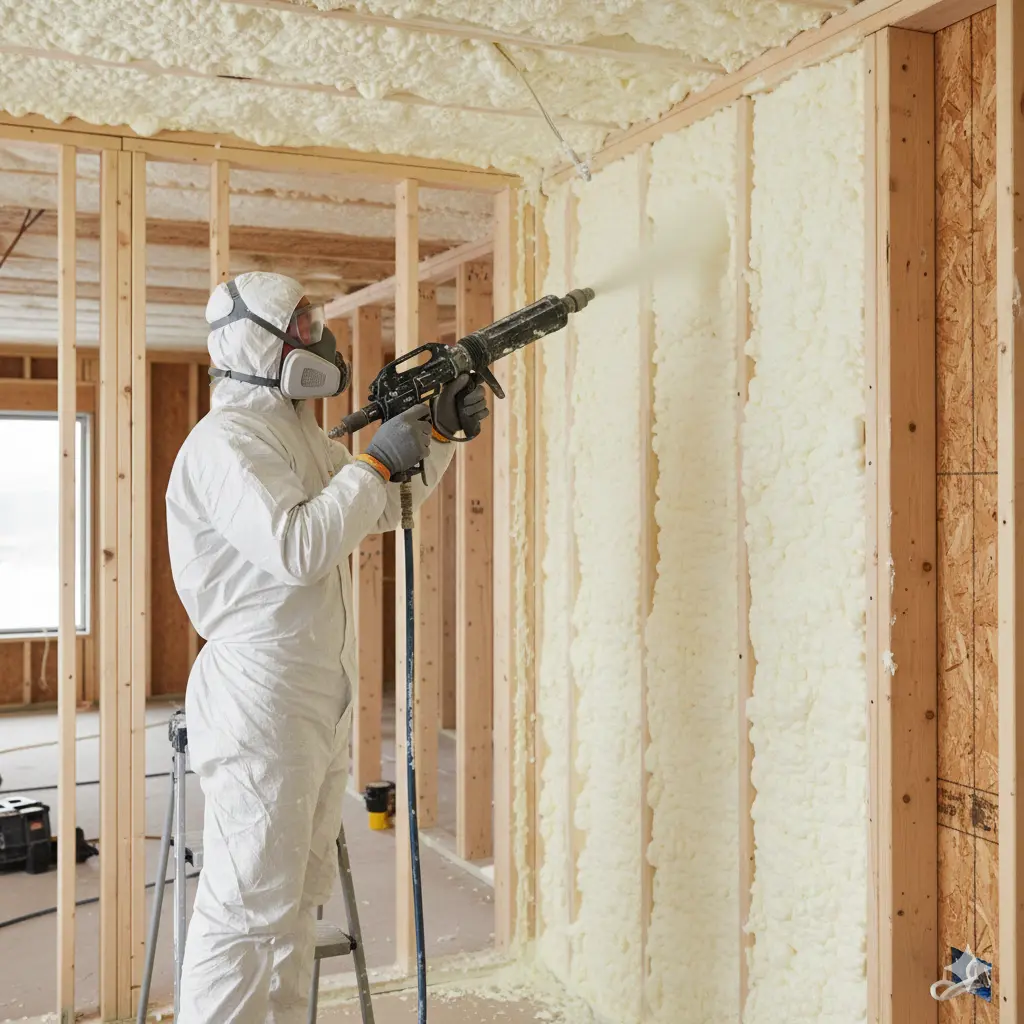
Spray foam insulation is a versatile and efficient method for insulating homes, offering significant advantages over traditional insulation materials.
This type of insulation is made by mixing and reacting unique liquid components that expand on contact, creating a foam that seals gaps and provides high thermal resistance.
Spray foam insulation increases structural strength by hardening and adding rigidity to walls and roofs, making buildings more resistant to strong winds and heavy snow, enhancing durability and longevity.
Description
Spray foam insulation is composed of two liquids, isocyanate and polyol resin, which interact when sprayed through a nozzle, forming a foam that expands and hardens.
This foam can be applied to walls, roofs, and other surfaces, providing an excellent air seal and thermal barrier.
Pros
- Energy Efficiency: Spray foam insulation creates an airtight seal, reducing energy loss and lowering heating and cooling costs.
- Improved Indoor Air Quality: Sealing gaps and cracks prevents the infiltration of dust, allergens, and pollutants.
- Moisture Barrier: It acts as a barrier to moisture, reducing the risk of mold and mildew growth.
- Durability: Spray foam insulation is long-lasting and does not sag or settle over time.
- Sound Insulation: It reduces noise from outside and between different rooms.
Cons
- Cost: Spray foam insulation is more expensive upfront compared to traditional insulation materials.
- Installation Complexity: Proper installation requires professional expertise.
- Potential for Over-Expansion: Incorrect application can cause over-expansion, leading to structural damage.
- Environmental Concerns: Some spray foams use chemicals that have high global warming potential (GWP).
Benefits
Besides the pros mentioned, spray foam insulation helps in increasing the structural integrity of buildings (particularly closed-cell types, which can add racking strength to walls by up to 300% in some applications), offers pest resistance, and may increase the overall property value due to its long-term energy savings.
Installation: DIY or Professional?
While spray foam insulation offers immense benefits, its application is not a task typically suited for DIY enthusiasts.
The installation process requires specialized equipment and in-depth knowledge of handling chemicals safely. Professional contractors are trained to mix and apply the spray foam precisely, ensuring it expands correctly and adheres properly to surfaces.
This helps in avoiding common issues such as over-expansion or uneven application, which can lead to structural damage or inefficient insulation.
Additionally, professionals are aware of safety protocols and environmental regulations, reducing the risk of hazardous exposure or improper waste disposal.
Therefore, hiring a professional is generally recommended to ensure the effective and safe installation of spray foam insulation.
Learn more about DIY vs. professional installation options.
Installation Types
Spray foam insulation comes in two types:
- Open-cell spray foam: Lighter and less dense, suitable for interior walls and ceilings. It typically provides an R-value of 3.6 to 3.8 per inch.
- Closed-cell spray foam: Denser and more rigid, offering higher insulation values, ideal for exterior walls and roofs. It typically provides an R-value of 6.0 to 7.0 per inch.
Add-ons and Enhancements
- Fire retardants: Enhance safety by reducing flammability.
- Soy-based spray foam: Reduces environmental impact.
- Radiant barriers: Combine with spray foam to further minimize heat transfer.
- Coatings and Sealants: For additional moisture control and durability.
Costs
The cost of spray foam insulation varies based on the type and area of application.
| Spray Foam Type | Material Costs | Installation Costs |
|---|---|---|
| Open Cell | $0.45 – $0.65 | $1.30 – $2.00 |
| Closed Cell | $1.00 – $1.50 | $2.00 – $3.00 |
However, the long-term energy savings and other benefits make it a worthwhile investment for homeowners looking to improve their home’s energy efficiency and durability.
Maintenance
Spray foam insulation generally does not require maintenance. However, it is essential to periodically check for any damage or gaps in the sealant that may have occurred due to settling or external forces. If any issues are detected, it is best to contact a professional contractor for repairs rather than attempting DIY fixes.
History
Spray foam insulation was developed in the 1940s for military use and adapted for residential applications in the 1970s. Its popularity has grown due to advancements in the materials and increased awareness of energy efficiency.
Controversies and Warnings
Spray foam insulation, while highly effective, has faced some controversies:
- Off-gassing: Some spray foams can release volatile organic compounds (VOCs) post-installation, affecting indoor air quality.
- Health Concerns: Improper handling and application can lead to exposure to harmful chemicals.
- Environmental Impact: Some formulations contribute to greenhouse gas emissions.
Conclusion
Spray foam insulation is an advanced solution for home insulation, offering many advantages, including energy efficiency, enhanced air quality, and moisture control.
Despite its higher upfront cost and some environmental concerns, its long-term benefits make it a worthwhile investment for homeowners seeking to improve their home’s thermal performance and comfort.
Proper installation by trained professionals is essential to maximize the benefits and ensure safety.
Sources
-
Energy Efficiency: U.S. Department of Energy. “Insulation.” energy.gov
-
Improved Indoor Air Quality: Environmental Protection Agency (EPA). “Indoor Air Quality.” [epa.gov](https://www.epa.gov/indoor-air-quality-iaq)
-
Moisture Barrier: Building Science Corporation. “Moisture Control for New Residential Buildings.” buildingscience.com
-
Durability: International Association of Certified Home Inspectors (InterNACHI). “Insulation and Thermal Performance.” [nachi.org](https://www.nachi.org/insulation-energy-loss.htm)
-
Sound Insulation: National Institute for Occupational Safety and Health (NIOSH). “Noise and Hearing Loss Prevention.” cdc.gov
-
Cost Considerations: HomeAdvisor. “Spray Foam Insulation Costs.” homeadvisor.com
-
Installation Complexity: Spray Polyurethane Foam Alliance (SPFA). “Professional Training Programs.” sprayfoam.org
-
Environmental Concerns: Environmental Protection Agency (EPA). “Spray Polyurethane Foam (SPF) Product Safety and Stewardship.” epa.gov
-
History and Development: American Chemical Society (ACS). “The Science and Technology of Polyurethanes.” acs.org